

verb: to consider; to believe something; to have an opinion or idea; to decide; to reason; to use the brain to decide to do something, to plan, to solve a problem, to understand a situation, etc.
Prefer listening to reading? Just click below.
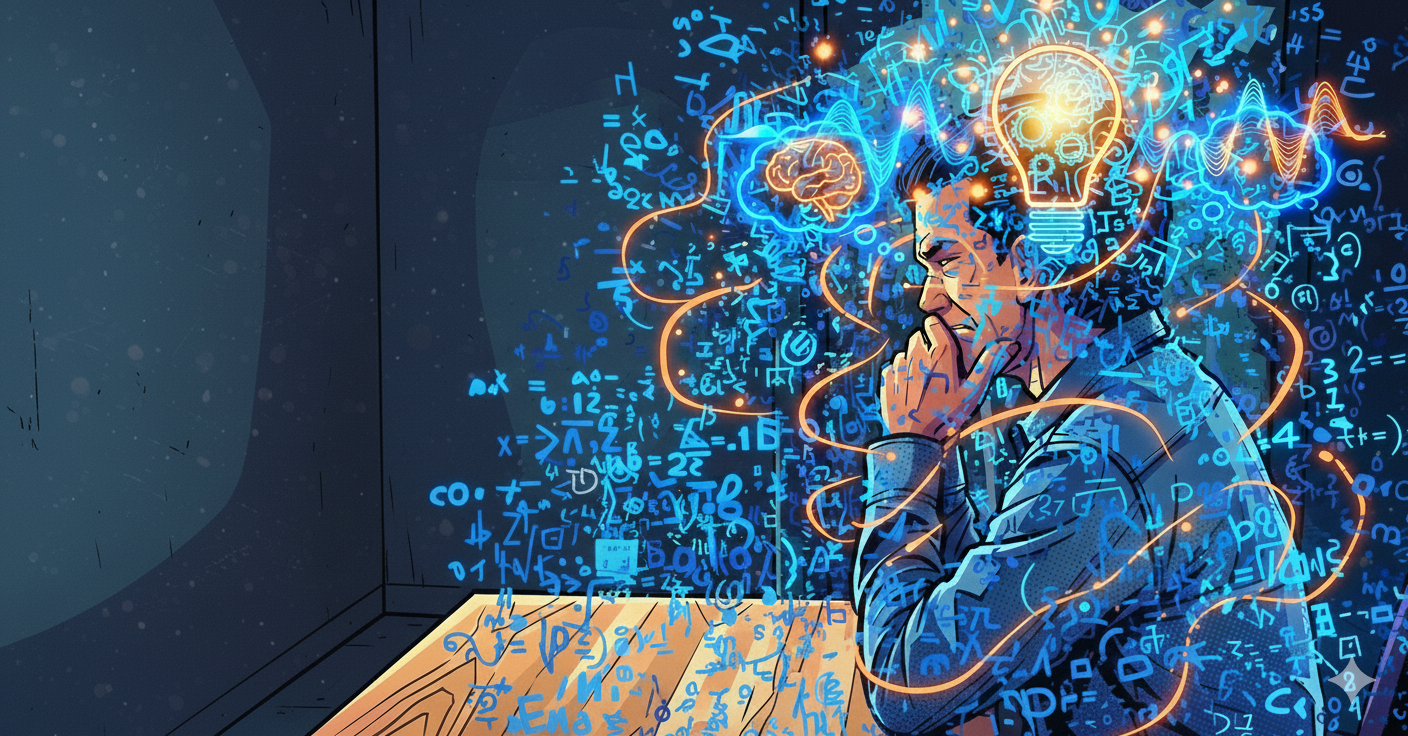
I think it’s time to give thinking some thought. Some people hardly seem to think at all, do they? They sort of… sail through life, events and whimsy propelling them in lieu of a fair wind. Conversely, we have so-called “overthinkers” who spend rather more time thinking than doing. In fact, I’ve known people think about something for so long and get so far removed from the original point that they forget what they were thinking about!
There can be something alluring – almost romantic – in a life unconstrained by thought and free of worry. After all, it’s not just the song that makes us remember “hakuna mutata”! No worries, no stress, just do as you please. Sounds idyllic, right?
Of course, if one never gives anything any thought at all then, by definition, they can’t think ahead. No forward planning. Now, don’t get me wrong, there is certainly a case to be made that just trying different things and seeing what happens can often yield better results than planning ahead. Then again, giving a problem or goal just a little thought will generally save time and effort by eliminating ideas that are obviously not going to work: e.g. pouring oil on a fire to put it out. (Please, please, please don’t try that.)
Another obvious drawback to thoughtlessness is the lack of consideration. If you don’t think, then you obviously aren’t thinking about anyone else, are you? While it’s impossible to be certain of all the consequences of our actions ahead of time, with a little thought, we can have a reasonably good idea. For example, I don’t think you need to spend hours mulling it over to work out that saying to someone “wow, you’re ugly” might well upset them.
Then again, thinking always seems to complicate things, doesn’t it? I suppose that’s because we’re expanding on the original subject matter, whatever that may be. Even as mundane a thought as “what should I eat tonight?” can evolve into an insurmountable decision with too much thought. When taken to this extreme on a regular basis, overthinking can become crippling. Doing anything without wasting hours analysing, questioning or driving yourself mad with worry becomes a fantasy. You complicate things unnecessarily and create problems that don’t exist beyond the confines of your mind. You daren’t stray from your everyday routine because there are simply too many variables. Life degenerates into mere existence. Therefore, I put it to you that it is no exaggeration to say that thinking is extremely dangerous.
Although, this point may be obsolete in the not-too-distant future. After all, we now have A.I. to think for us. We don’t need to burden ourselves with the time and stress of thinking, do we? Just ask the ever-evolving robot. Of course, there are instances where it’s extremely useful: I’ve asked it to help me research a couple of things, and several pictures on this blog where A.I. generated. But how long before it’s everywhere, making life as easy and stress-free as possible, doing all of our thinking for us? No responsibilities. No worries. Hakuna mutata.
I hope, dear reader, you now have a clearer understanding why I caution you against thinking too much, though I concede a complete absence of thought may be just a tad unwise. Perhaps a balanced approach? Or maybe not… Why don’t we ask a robot?
If you think this was worth reading and would like to subscribe to our newsletter, leave a comment or support our work, please see below.
+ Click Here to Support Our Words
Subscribe to be notified whenever we publish a new post. No fees. No fuss. No spam.