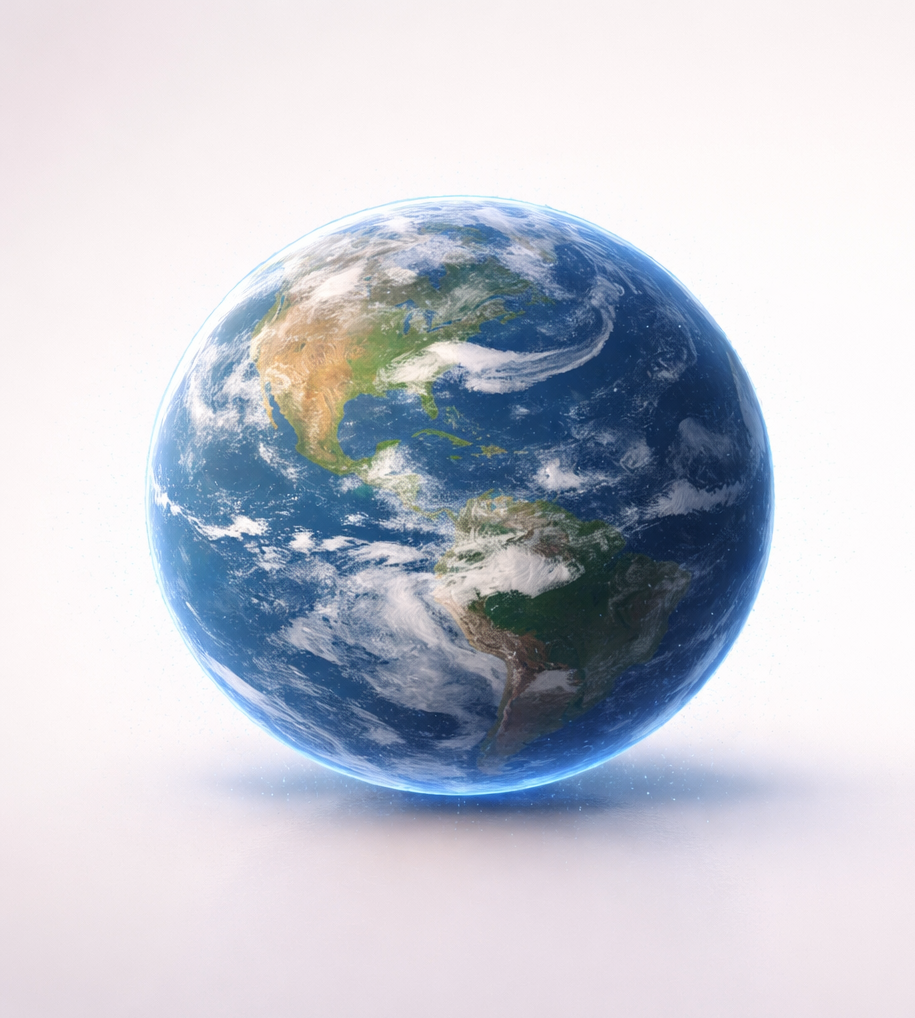

noun: the earth and all the people, places and things on it; a group of things such as countries or animals, or an area of human activity or understanding; a planet or other part of the universe, especially one where life might or does exist
Prefer listening to reading? Just click below.
“The world” is a strange term. Its scope ranges from the sum of an individual’s experience to an entire planet. Yet, we simply say “the world”, whichever of these utterly different things we’re referring to. Seems a tad ridiculous, doesn’t it? Then again, even if we narrow our focus to individuals’ internal worlds, the breadth of the term still seems nigh on unfathomable…
As a starting point, people’s individual worlds can vary dramatically in scale. Some are minuscule. The closed-minded, by definition, have closed worlds. They don’t reach out to others, connect or grow. They just are. Small, stifling and empty. But, they’re also safe. They avoid anything that could upset their small, delicate, internal ecosystem. No new problems (or predators). The only problem is, when the unexpected happens: when one of life’s metaphorical comets crashes into such a small world, the damage can be catastrophic. Small, seemingly trivial upsets – like a creased garment coupled with a broken iron – can be seen as immense problems relative to that person’s experience and mental fortitude. Conversely, those whose experience is broader will generally have a different perspective on such matters…
Going back to the comet analogy for a moment, if a large comet hits a small planet, it will damage a significant area. If that same comet, moving at the same velocity hits a planet ten times the size of the aforementioned planet, what happens? Is the damage the same? Ironically enough, that’s yet another perspective question. In terms of sheer force of impact and measurable area, it will be similar. But relative to the planets’ respective sizes? No. A far smaller percentage of the large planet will be affected than the small one. It seems a strange notion that our minds function in a manner even remotely similar to planets, yet, we must instinctively know this to be true. Otherwise, we wouldn’t call them both “worlds”, would we? Unless human arrogance is such that we believe ourselves to be all-encompassing?
Then again, it’s a small world after all, and not just because Disney says so. When we want to discuss everything, even “the universe” doesn’t cut it anymore! “Multiverse” is getting close, but as our understanding grows, we discover and imagine things beyond the boundaries of our previous level of imagination and experience. These broader perspectives, of course, require broader terms, and we create new words to accommodate them. I wonder how far our imaginings of time, space, consciousness and possibility will have expanded in another thirty years…
We can’t discuss the word “world” without mentioning dear Mother Earth, can we? We should probably be more grateful that she lets us into her unique, internal world so readily. Then again, mothers love their children, don’t they? And they don’t play favourites – or at least Mother Earth doesn’t. That’s how we ended up with survival of the fittest, I suppose. But she does encourage her children to play nicely together. Think how much easier life is when we share resources that are plentiful, or assist each other when natural disasters occur. After all: she never picks on all of us at once, does she?
I think all of these things, and – despite persistent warnings against over-thinking – I think to myself, what a wonderful world!
If you would like to help affirm our place in the world by subscribing to our newsletter, leaving a comment or supporting our work, please see below.
Even modest contributions offset running costs and keep our blog online.
+Or Click Here to choose a different amount
Subscribe to be notified whenever we publish a new post. No fees. No fuss. No spam.